When deciding between cultivated beef and cultivated mince, it all comes down to the dish you’re preparing. Cultivated beef is best for recipes where the meat takes centre stage, like steaks, stir-fries, or kebabs. Its firm texture and ability to hold shape make it ideal for grilling or roasting. Cultivated mince, on the other hand, is perfect for sauces, fillings, and mixed dishes like Bolognese, tacos, or meatballs, thanks to its fine texture and even fat distribution.
Key Points:
- Cultivated Beef: Works well for steaks, stir-fries, and kebabs, offering a tender texture and predictable cooking results.
- Cultivated Mince: Ideal for quick, versatile dishes like Bolognese, tacos, and casseroles, blending easily with other ingredients.
Quick Tip: Use cultivated beef for meals where presentation and structure matter. Opt for cultivated mince when you need a flavourful, binding ingredient for everyday recipes.
Alex Shirazi Talks About His Cookbook for Cultivated Meat
sbb-itb-c323ed3
Meal Ideas for Cultivated Beef
Thanks to its reliable texture and consistency, cultivated beef works beautifully in a variety of dishes. Whether you’re aiming for a hearty steak dinner, a quick stir-fry, or a comforting chilli, this ingredient delivers on taste and versatility.
Cultivated beef shines in recipes that highlight the meat itself. Its structured form - whether as steaks, strips, or cubes - holds up well during cooking, making it ideal for dishes where the meat is the star. Plus, its cellular structure absorbs marinades effortlessly, ensuring tender, flavourful results every time.
Grilled Steaks with Seasonal Vegetables
A perfectly grilled steak is one of the best ways to showcase cultivated beef’s texture and flavour. For an even cook and a crisp crust, try the reverse-sear method - slow cooking followed by a high-heat finish. Alternatively, sous vide cooking followed by a quick sear locks in moisture and enhances the caramelisation.
"We've found that cultivated beef responds beautifully to sous vide techniques followed by a quick sear, maintaining moisture while developing beautiful caramelization." - Chef Benjamina Cha [2]
Serve your steak alongside roasted seasonal vegetables like Brussels sprouts, beetroot, or sweet potatoes. A dollop of herb butter or a citrus-herb rub (think lemon zest, thyme, and basil) adds a bright touch that complements the meat’s clean flavour. Thanks to its consistent structure, cultivated beef steaks cook predictably, removing the guesswork often associated with traditional cuts.
Stir-Fry Bowls
For a quick and flavourful option, thinly sliced cultivated beef strips are perfect for high-heat stir-fries. The meat browns beautifully with minimal handling, developing a rich sear while maintaining its structure. Toss it with peppers, onions, and a soy-ginger sauce for a speedy, satisfying weeknight meal.
For the best results, cook the beef and vegetables separately to prevent the meat from steaming in the liquid released by the veggies. Use high-heat fats like coconut oil or tallow to achieve the ideal texture. Cultivated beef’s ability to absorb marinades enhances bold, punchy flavours, making it a great choice for Asian-inspired dishes served over rice or noodles.
Beef and Sweet Potato Chilli
Cubed cultivated beef brings a hearty texture to slow-cooked chilli, holding its shape and tenderness even after hours of simmering. The meat’s structure ensures each bite remains satisfying, while its moisture retention keeps it succulent.
Pair the beef with sweet potatoes, tomatoes, and a blend of warming spices for a one-pot dish that’s as comforting as it is flavourful. The slow cooking process allows the spices to meld, and cultivated beef’s clean flavour acts as a perfect base for the rich, layered taste of the chilli. This dish is a fantastic option for colder evenings when you’re craving something hearty and satisfying.
Meal Ideas for Cultivated Mince
Cultivated mince, with its fine texture, is a fantastic canvas for absorbing flavours, making it perfect for sauces, fillings, and baked dishes. Its high surface area soaks up seasonings and liquids, resulting in rich, flavour-packed meals that suit a variety of cuisines - from Italian classics to quick, fuss-free tacos.
One key tip? Browning. Taking the time to develop a golden crust adds depth and a satisfying texture, transforming any dish into something special. Once browned, cultivated mince blends seamlessly into sauces and bakes, making it a go-to for hearty, comforting meals.
Here are some recipes that showcase its versatility and ability to shine in both traditional and modern dishes.
Spaghetti Bolognese
This classic Italian dish is an ideal way to highlight cultivated mince. Start with a soffritto - a base of sautéed onions, carrots, and celery - to build a foundation of sweetness and depth. Add the mince, breaking it up with a wooden spoon as it browns over medium-high heat for 3–4 minutes.
"The quality of your... mince really matters here. We find the ones with a firmer texture crumble best and hold up in the sauce without going mushy." - BOSH! [5]
Deglaze the pan with red wine to lift all the browned bits from the bottom, then stir in tinned tomatoes and beef stock. Let the sauce simmer gently for at least 30 minutes - longer if you have the time - to allow the flavours to meld. Just before serving, add a splash of starchy pasta water for a silky finish. This technique, rated 4.8/5 stars by over 1,100 users on BBC Good Food, ensures a rich, meaty sauce that clings beautifully to spaghetti [3].
Mince Tacos
For a quick, flavour-packed meal, cultivated mince makes an excellent taco filling that’s ready in under 15 minutes. Start by browning the mince with onions, garlic, and spices like cumin and paprika. Add a splash of Worcestershire sauce and a dollop of tomato purée, letting everything simmer briefly.
Pile the seasoned mince into taco shells and top with fresh salsa, sliced avocado, shredded lettuce, and a squeeze of lime. The mince's ability to absorb bold spices ensures every bite bursts with flavour, making it a star ingredient for taco night.
Loaded Mac and Cheese Bake
Combine the comforting appeal of mac and cheese with the hearty texture of cultivated mince for a crowd-pleasing baked dish. After browning the mince, stir it into cooked macaroni along with a creamy cheese sauce and a touch of tomato purée for a hint of acidity.
Transfer everything to a baking dish, sprinkle generously with cheese, and bake until golden and bubbling. The mince blends evenly with the pasta, ensuring every bite is satisfying. Plus, this dish reheats beautifully, making it a great option for meal prep or leftovers.
Mediterranean Bowls
For a lighter, fresher option, try a Mediterranean-inspired bowl. Brown the mince with garlic and a pinch of oregano, then layer it over hummus alongside cucumber, olives, and fresh herbs. Add quinoa or couscous for texture and drizzle with tahini or a lemon-yoghurt dressing.
"Savoury mince is a classic comfort food... endlessly adaptable and forms the base of many tasty and nutritious meals, from pies to pasta." - Emily Johnson, Rhug Estate [4]
This combination of creamy hummus, crisp vegetables, and seasoned mince creates a balanced, nutrient-rich meal that’s both refreshing and satisfying.
These recipes highlight how cultivated mince can adapt to a wide range of dishes, offering delicious and flexible options for every kitchen.
Comparison Table: Cultivated Beef vs Mince
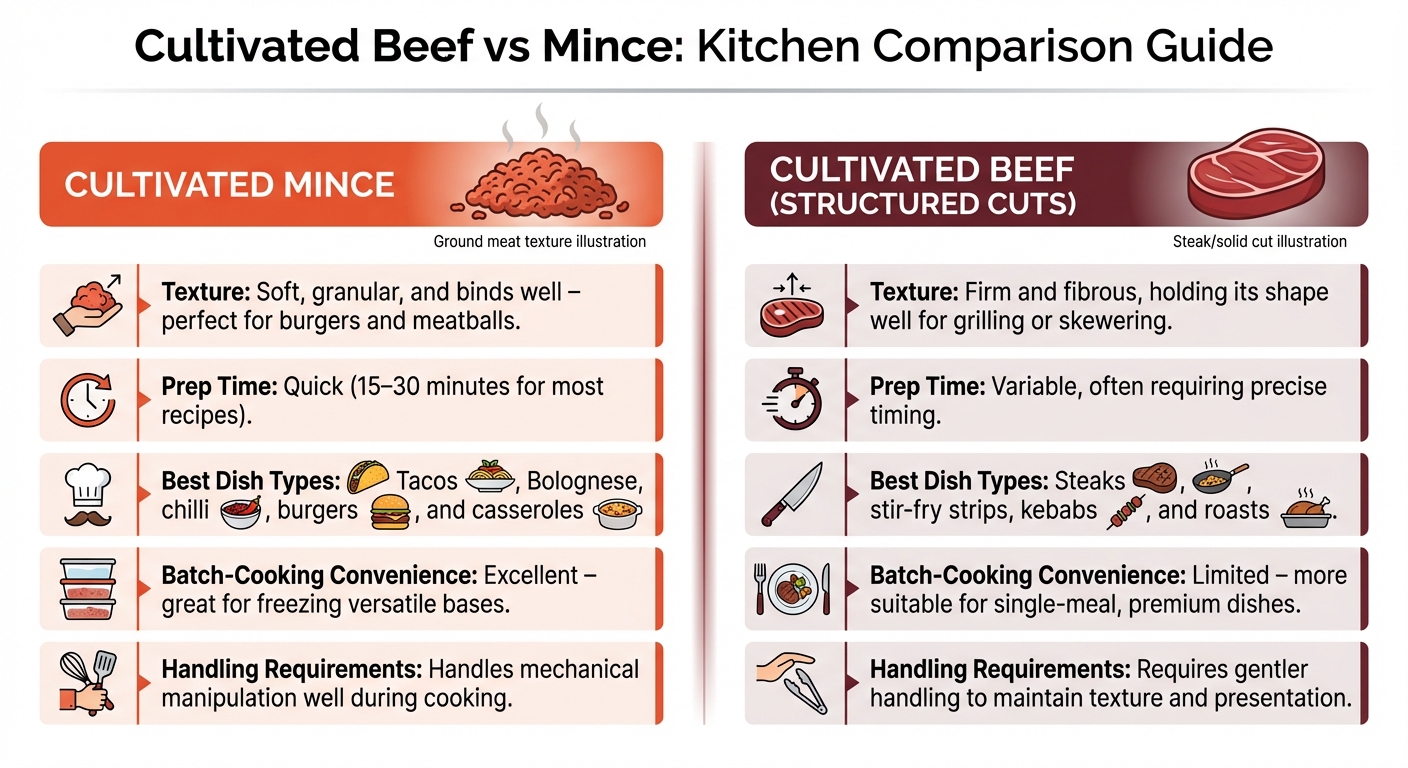
Cultivated Beef vs Mince: Kitchen Comparison Guide
Choosing between cultivated beef and mince depends on what you're cooking, how much time you have, and the type of dish you're aiming to create. Each option has its strengths, and understanding these can help you make the best choice for your meal.
Here's a breakdown of how cultivated mince and structured cultivated beef compare in the kitchen:
| Factor | Cultivated Mince | Cultivated Beef (Structured Cuts) |
|---|---|---|
| Texture | Soft, granular, and binds well – perfect for burgers and meatballs | Firm and fibrous, holding its shape well for grilling or skewering |
| Prep Time | Quick (15–30 minutes for most recipes) | Variable, often requiring precise timing |
| Best Dish Types | Ideal for tacos, Bolognese, chilli, burgers, and casseroles | Suited for steaks, stir-fry strips, kebabs, and roasts |
| Batch-Cooking Convenience | Excellent – great for freezing versatile bases | Limited – more suitable for single-meal, premium dishes |
| Handling Requirements | Handles mechanical manipulation well during cooking | Requires gentler handling to maintain texture and presentation |
Cultivated mince is perfect for quick, versatile meals that you can whip up in under half an hour. It's especially handy for weeknight dinners or batch cooking, as it freezes well and adapts to a range of recipes. On the other hand, structured cultivated beef is best reserved for dishes where presentation and technique shine. It pairs beautifully with methods like reverse-searing or sous-vide, which help retain moisture and enhance flavour.
Whether it's a hearty Bolognese or a beautifully grilled steak, these options let you tailor your choice to the occasion and your culinary goals.
When to Choose Cultivated Beef Over Mince
Structured cultivated beef shines in recipes that call for firm texture and high-heat cooking. Think dishes like steaks, stir-fry strips, or kebabs - essentially, recipes where the meat needs to hold its shape and deliver a satisfying sear. On the other hand, cultivated mince works best when blended into sauces or dishes where texture is less of a focal point.
The magic of cultivated beef lies in its ability to sear beautifully while locking in moisture. This makes it perfect for meals like grilled steaks or pan-seared fillets, where a crisp, caramelised crust contrasts with a tender, juicy interior. The rich caramelisation you get from high-heat cooking is a key feature that sets it apart.
For slow-cooked meals like stews or casseroles, structured cultivated beef is a game-changer. Larger cuts retain moisture remarkably well during low-temperature cooking [2], ensuring a satisfying texture throughout. Its uniform structure also guarantees even cooking, whether you're using slow-cooking techniques or something precise like a reverse-sear. This makes it an excellent choice for hearty dishes or a perfectly cooked steak.
When presentation matters, structured cultivated beef takes the lead over mince. Whether you're skewering chunks for kebabs, slicing strips for a stir-fry, or plating a beautifully seared steak, these cuts add a visual and textural appeal that mince simply can't match. It’s the go-to option when you want your dish to look as impressive as it tastes.
Conclusion
The choice between cultivated beef and cultivated mince depends entirely on the dish you're preparing. If you're making something where the meat takes centre stage - like grilled steaks, stir-fry strips, or kebabs - structured cultivated beef is the way to go. Its texture and ability to achieve a proper sear make it ideal for these kinds of recipes. On the other hand, cultivated mince works beautifully in dishes where the meat is mixed with other ingredients, such as spaghetti Bolognese, tacos, or a hearty mac and cheese bake.
Both options offer the same nutritional benefits as traditional meat[1]. The key difference lies in how they perform during cooking: cultivated beef is perfect for high-heat methods, while cultivated mince provides excellent binding for everyday recipes[2]. This versatility ensures there's an option for every type of meal, giving you the freedom to experiment in the kitchen.
As the future of cultivated meat continues to develop, there's plenty of room to explore how each format can elevate your cooking. The examples above highlight when to use each product, helping you make the best choice for your culinary needs. Understanding how these products behave in the kitchen allows you to cook with confidence and creativity.
For more insights on cultivated meat and its exciting future, visit Cultivated Meat Shop. Dive into a world of possibilities with cultivated meat!
FAQs
Can I swap cultivated beef and cultivated mince in recipes?
Yes, you can usually use cultivated beef and cultivated mince interchangeably in recipes, as they're both derived from the same source but vary in form. Cultivated beef typically refers to larger cuts, such as steaks, while cultivated mince is ground and cooks more quickly. For meals like tacos, burgers, or pasta sauces, cultivated mince is ideal. However, larger cuts may require specific cooking techniques. The key distinction lies in their texture.
How do I stop cultivated mince going watery when browning?
To keep your mince from turning watery while browning, use a moderately high heat. Let the excess moisture evaporate naturally rather than draining it. Keep cooking until the liquid dissipates and the mince forms a rich, golden-brown crust. This approach not only avoids a watery texture but also boosts the flavour.
What’s the best way to get a proper sear on cultivated beef?
To get that perfect sear on cultivated beef, start with a pan that holds heat well - like a cast iron skillet. Make sure the beef is thoroughly patted dry to eliminate excess moisture. Preheat the pan until it's very hot, then add a small amount of a high-smoke-point oil, such as sunflower oil. Place the beef in the pan, ensuring there's enough space so the pieces aren't crowded. Let the beef cook undisturbed until it forms a caramelised crust, and only flip it once the surface has browned nicely.