Eating sustainably doesn’t mean giving up meat entirely. By making small changes - like eating more plant-based meals, reducing food waste, and planning for cultivated meat - you can lower your carbon footprint and support a healthier planet. Cultivated meat, grown from animal cells, uses far fewer resources than conventional farming and could cut emissions by up to 92% compared to beef. While it’s not yet available in the UK, getting ready now can make the transition smoother when it hits the shelves.
Key Points:
- Food production contributes to one-third of global emissions, with livestock being a major factor.
- Cultivated meat offers a resource-efficient alternative, requiring up to 99% less land and 96% less water.
- Start small: reduce conventional meat, prioritise plant-based meals, and plan to incorporate cultivated meat.
- Tools like the Cultivated Meat Shop can help you stay informed and prepared.
Takeaway: Focus on reducing high-impact foods, managing portions, and exploring new options like cultivated meat to build a more sustainable diet over time.
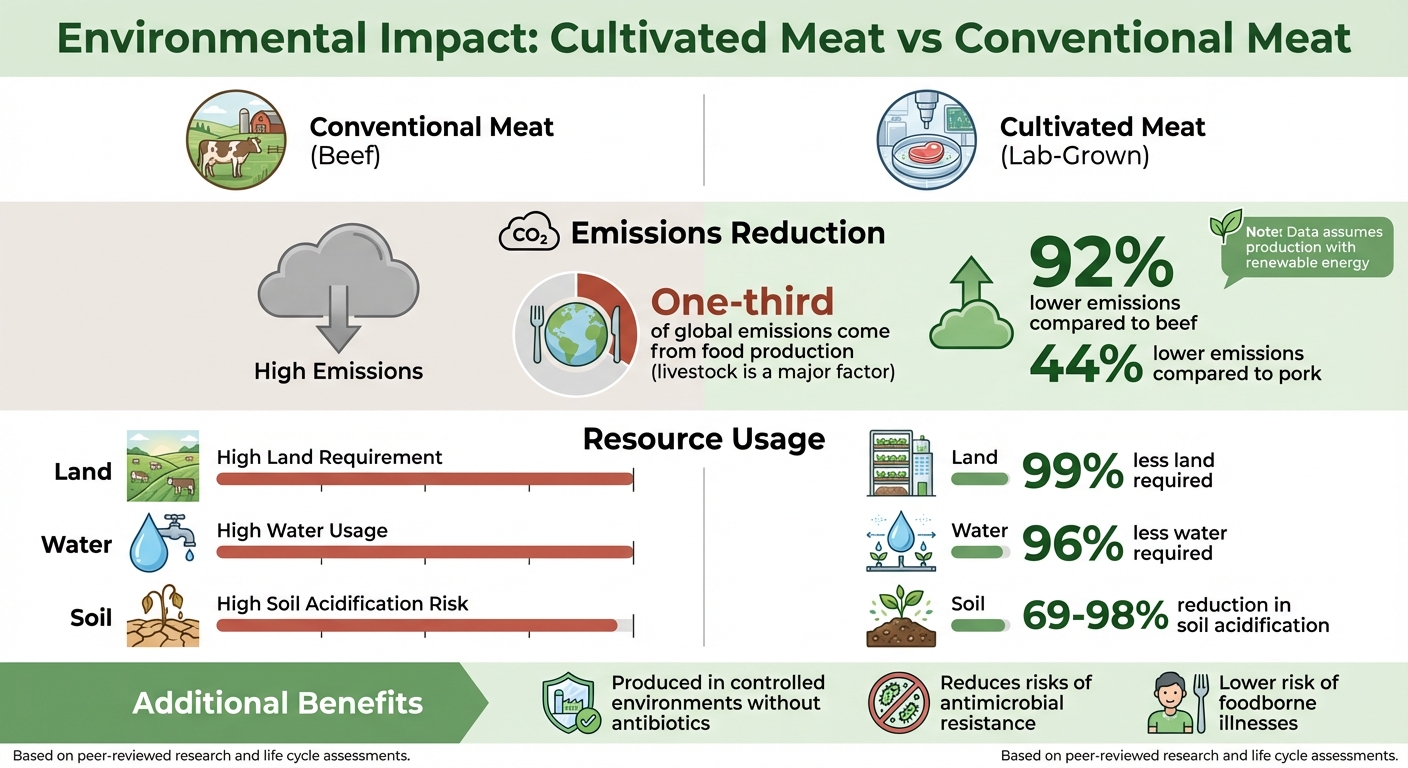
Environmental Impact of Cultivated Meat vs Conventional Meat Production
The costs and environmental impacts of cultivated meat
Setting Your Sustainable Eating Goals
When it comes to making your diet more sustainable, setting clear and measurable goals is the first step. Focus on reducing emissions, cutting down on food waste, and planning how cultivated meat might fit into your meals in the future. Start by identifying which environmental or ethical issues matter most to you - this will help guide your choices.
Identify Your Main Priorities
Sustainable eating can mean different things to different people. For some, it’s about cutting greenhouse gas emissions or saving water, while others prioritise animal welfare or reducing antibiotic use in farming. For instance, if water conservation is a top concern, you might consider cutting back on beef, which requires far more water to produce than other proteins. On the other hand, if you’re worried about antibiotics in farming, cultivated meat could be an appealing alternative since it’s grown in controlled environments without the need for routine antibiotics [1]. Let your priorities guide your decisions and shape the changes you make to your diet.
Set Targets for Reducing Conventional Meat
Having specific, time-bound goals makes it easier to track your progress. Here are a few practical examples:
- "Starting next month, I’ll cut my beef and lamb meals in half, reducing them from four per week to two, and replace the rest with plant-based dishes."
- "I’ll limit red meat to just one day a week (like a Sunday roast) and opt for plant-based meals or poultry the rest of the time."
- "Within six months, I’ll ensure that at least 60–70% of my main meals are plant-based or include low-impact proteins."
These goals are flexible enough to fit different lifestyles while still making a meaningful difference. To stay on track, review your progress every three to six months. This will help you adjust to any changes in your routine and push your goals further as you get more comfortable. For instance, if plant-based meals are becoming a regular and enjoyable part of your diet, it might be time to raise the bar.
Once you’ve set these initial targets, think about how cultivated meat could gradually replace high-impact conventional meat in your meals.
Plan How to Add Cultivated Meat to Your Diet
Although cultivated meat might not yet be a regular grocery item, planning ahead can make the transition easier when it becomes widely available. Start by identifying 2–3 high-impact meals - like burgers or roast dinners - that you could swap for cultivated versions. By focusing on these favourites, you can make the change manageable while targeting meals that typically have the largest environmental footprint.
To stay informed about availability, platforms like Cultivated Meat Shop offer updates, waitlists, and ideas for incorporating cultivated meat into your recipes. This way, you’ll be ready to make the switch when the time comes, all while keeping portion sizes in check to minimise waste.
Creating a Weekly Meal Pattern
Building a weekly meal plan centred on plant-based foods and incorporating cultivated meat alternatives can make sustainable eating easier. It’s a practical way to balance nutrition while reducing environmental impact.
Focus on Plant-Based Foods
Start by making vegetables, legumes, whole grains, and nuts the core of your meals. A simple method to follow is the "plate method": fill half your plate with vegetables, a quarter with whole grains like brown rice or quinoa, and the remaining quarter with legumes such as lentils or chickpeas. Batch-cooking dishes like hearty stews made with whole grains can simplify meal prep and help establish long-term habits. To ease into this, consider limiting animal proteins to weekends. Since plant-based foods typically have a smaller environmental footprint, they pair well with cultivated meat for a more sustainable diet [2][5].
Once you’ve built a foundation with plant-based meals, the next step is identifying high-impact meat dishes to replace with cultivated meat.
Choose Meals to Replace with Cultivated Meat
Pinpoint 1–3 meals per week that have the highest environmental impact and plan to swap them with cultivated meat alternatives when they become widely available. Common choices might include beef burgers or mince for midweek dinners, pork sausages for a weekend brunch, or lamb chops for a Sunday roast. Replacing traditional meat with cultivated options can lead to a significant reduction in carbon emissions [2][4]. To stay organised, create a weekly meal schedule that highlights the meals you plan to swap. For inspiration and updates on availability, you can visit the Cultivated Meat Shop, where you’ll find product previews and can join their waitlist.
In addition to meal swaps, managing food waste is another essential piece of the puzzle.
Reduce Food Waste
Portion control and making the most of leftovers are effective ways to minimise food waste while supporting sustainability. These practices not only reduce waste but can also lower your grocery bills over time. Opt for seasonal UK produce - like courgettes in the summer or root vegetables in the winter - since they tend to last longer and spoil less quickly. Pair these with cultivated meat for meals like an autumn squash and cultivated mince stew. This approach supports local food systems, reduces transport emissions, and aligns with the environmental benefits of cultivated meat, which can lower soil acidification by 69–98% [2][3]. By controlling portions and reducing waste, you’ll strengthen your weekly sustainable eating plan while making a meaningful impact.
sbb-itb-c323ed3
Evaluating Cultivated Meat Products
Assessing cultivated meat products is a smart way to ensure your food choices align with sustainable eating goals. When these products become available, consider their environmental impact, nutritional value, and the credibility of the information provided. This approach helps you make informed decisions that benefit both you and the planet.
Check Environmental Impact Information
Start by examining the product's carbon footprint, typically measured in kg CO₂e per kilogram. Research indicates that cultivated meat could cut emissions by up to 92% compared to beef and 44% compared to pork [2][4]. Look for brands that openly share data on land and water use, ideally verified through independent life cycle assessments. For example, cultivated meat requires considerably less water than traditional beef production. Make sure any environmental claims are backed by peer-reviewed studies, and keep an eye out for emerging sustainability labels in the UK market that validate these products' eco-credentials.
Review Nutritional Content
Once you've evaluated the environmental aspects, turn your attention to the product's nutritional profile. Check the nutrition label for a balance of protein, fats, and micronutrients. Cultivated meat is designed to deliver high-quality, complete protein, comparable to conventional meat. Additionally, it can be tailored to include lower levels of saturated fat and higher amounts of omega-3 fatty acids, which may support heart health [7]. If you're looking at processed options like burgers or sausages, compare their salt (sodium) content to ensure they meet the UK's voluntary salt reduction targets. Also, check for added nutrients like vitamin B12, iron, and zinc - fortified products can be especially helpful if you're cutting back on traditional meat [7][6].
Use Reliable Sources
To make confident choices, rely on trusted platforms such as Cultivated Meat Shop, which offers up-to-date information on production methods and sustainability benefits. Since cultivated meat is produced in sterile, controlled environments without antibiotics, it may help lower risks associated with antimicrobial resistance and foodborne illnesses. For a balanced perspective, consult science-based organisations or academic reviews to understand both the advantages and limitations of cultivated meat. Reliable, evidence-based information ensures that every step of your sustainable eating journey is well-informed and effective.
Maintaining Your Habits Over Time
Once you've added cultivated meat to your meals, it's important to stay adaptable and informed. Keeping track of your goals, staying updated on industry news, and exploring a mix of protein options can help make sustainable eating feel like second nature.
Review Your Goals Regularly
Every few months, take a moment to assess how your meat consumption aligns with your sustainability goals. Use the latest data to evaluate your progress and make adjustments where needed. For example, you might decide to increase the proportion of cultivated meat in your meals or try hybrid products that combine cultivated meat with plant-based ingredients to reduce costs and environmental impact [2]. These regular check-ins ensure your eating habits evolve alongside your sustainability aspirations.
Stay Informed About Cultivated Meat
Keeping up with developments in cultivated meat can help you make informed choices as the market grows. Trusted sources like Cultivated Meat Shop regularly share updates on new products, industry breakthroughs, and regulatory changes. They’ve featured stories about Michelin-starred chefs incorporating cultivated meat into their menus and startups experimenting with cultivated seafood. You can even sign up for early access notifications to try the latest offerings as they hit the UK market. Staying informed ensures you’re always aware of the newest advancements, sustainability insights, and product launches.
Experiment with Different Proteins
To keep your meals interesting and adaptable, try incorporating a variety of protein sources into your diet. Alongside cultivated meat, explore plant-based options like lentils, chickpeas, and tofu, or fermented foods such as tempeh and miso. This variety not only adds excitement to your meals but also helps you adapt to changes in supply and seasonal availability [5]. By mixing and matching different protein sources, you’ll create a more balanced and flexible approach to sustainable eating - one that’s easier to maintain over the long term. The more comfortable you become with diverse options, the more natural these habits will feel over time.
Conclusion
Creating sustainable eating habits is a journey best taken step-by-step. Start by setting clear goals, focus on incorporating more plant-based meals, and plan to gradually replace high-impact meats with cultivated meat to lower your environmental footprint. Studies indicate that cultivated meat, especially when produced with renewable energy, could significantly cut emissions and reduce water usage, making it a valuable addition to any sustainable eating strategy.
Once your goals are in place, design your meals to align with them. Build your weekly menus around vegetables, whole grains, and pulses, and decide which conventional meats you’ll replace first. When cultivated meat becomes available, take the time to review product labels and claims to ensure they meet your expectations.
Staying informed is just as important as planning. Keep learning and exploring new options to make confident, well-informed decisions. The Cultivated Meat Shop is a great resource for staying ahead, offering product previews, educational content, and waitlist opportunities so you’ll be among the first to access cultivated meat when it launches in the UK.
FAQs
What are the environmental advantages of choosing cultivated meat?
Opting for cultivated meat brings notable benefits for the environment. Since it’s produced without relying on traditional livestock farming, it can dramatically cut down greenhouse gas emissions, save significant amounts of water, and use far less land. This approach offers a promising way to address some of the environmental challenges tied to food production.
By choosing cultivated meat, people can enjoy the flavour and nutritional value of real meat while contributing to a more planet-friendly food system.
What’s the best way to include cultivated meat in my meals?
Start exploring the range of cultivated meat products available at Cultivated Meat Shop. A great way to begin is by trying small portions of cultivated chicken or beef and incorporating them into dishes you already love - think stir-fries, pasta, or salads. This approach helps you ease into the flavours and textures without feeling overwhelmed.
Get creative with recipes that highlight the distinct taste of cultivated meat. Experiment with different varieties to find your favourites. Over time, you can seamlessly integrate cultivated meat into your meals, making it a regular part of your sustainable lifestyle.
What factors should I keep in mind when choosing cultivated meat products?
When choosing cultivated meat products, it's important to weigh a few key aspects to make sure they match your preferences and values. Start by checking for safety and quality standards - these ensure the product adheres to strict food regulations. It's also worth looking into how transparent the production process is. Understanding how the meat is grown and sourced can give you a clearer picture of what you're consuming.
Taste and texture are crucial too. After all, the product should be enjoyable to eat and suit your palate. Don’t forget to review the nutritional content to see how well it fits into your diet. Lastly, think about the potential environmental advantages. Cultivated meat is designed to offer a more eco-friendly alternative to traditional meat production, which might align with your sustainability goals.